
Only 40% of Malay youth would vote if GE15 is held now, study finds

Undi 18 voters queue to cast their ballots for the first time at the Johor state election in March.

Malaysia Now | 17-Jun-2022 – Only 33% of Malay youth are interested in politics, with trust in government administration at about 69%.

Only 40% of Malay youth in the country would turn out to vote if the 15th general election (GE15) is held in the near future, research by an independent pollster shows.

Merdeka Center said this was a low percentage as the youth comprise about 58% of the electorate as a whole.

The study, conducted with NGO Sisters in Islam, was carried out from Oct 30, 2021 to Jan 25, 2022. It saw the participation of 1,216 Malay respondents aged 15 to 25 through face-to-face interviews across the country, including in Sabah and Sarawak.

According to demographic data for 2022 from the statistics department, a total of 12.2 million people aged 18 to 40 are eligible to vote, with 5.8 million new voters automatically registered after the introduction of Undi 18.

The study also found that only 33% of Malay youth are interested in politics, with trust in government administration at about 69%.

The rest said they had lost interest in the challenges and political issues in the country, with 52% of the belief that the country was on the wrong track.

At a session to present the findings of the study in Kuala Lumpur yesterday, Merdeka Center director Ibrahim Suffian said a survey conducted 12 years ago had shown that 66% believed Malaysia was on track to becoming a developed country.

The latest study had contained questions similar to those in the 2010 survey, and covered the same target group.

Merdeka Center also identified some of the challenges faced by the youth in dealing with issues arising after the Covid-19 pandemic, especially in terms of the economy and employment.

Ibrahim said the main concern for the group was job security, with 48% worried about losing their current jobs and being unable to find new work.

Other areas of concern included the environment (43%), corruption (40%), an influx of refugees and immigrants (35%) and mental health (30%).

“The views given by the youth in this latest study are driven by their experiences and challenges over the past few years, including the spread of an epidemic, economic uncertainty and political turmoil,” Ibrahim said.

“This has affected their confidence about the future and their views of the country’s direction.”

Ibrahim said many Malay youth were also sceptical of the political process and saw politicians as “transactional” in nature.

Azmil Tayeb of Universiti Sains Malaysia meanwhile said the same trend could be seen among his students who were increasingly losing faith in the political process.

He said they were instead shifting to volunteer work and the organisation of community programmes with the local people.
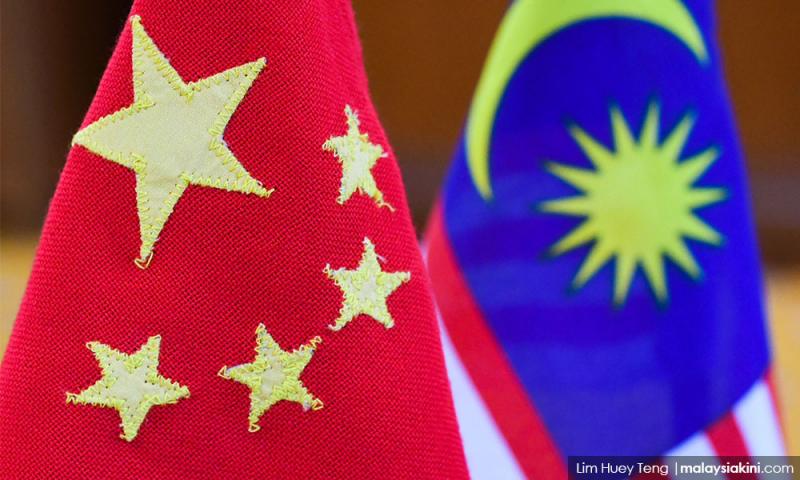
Positive perception of China grows among Malaysians

China.org.cn | 20-May-2022 – KUALA LUMPUR, May 20 (Xinhua) — Malaysians have an increasingly positive perception of China in 2022 compared to 2016, according to a Kuala Lumpur-based opinion research firm.

A study by Merdeka Center found that adult Malaysians view China more favorably, citing personal experiences, Chinese investments in Malaysia and future cooperation as among the factors that have contributed to an increased positive perception, the research firm said in a statement on Thursday.

Of those surveyed, 70 percent of the respondents perceived relations between Malaysia and China as good, compared with 67 percent in the 2016 survey.

When asked which countries helped Malaysia the most during the COVID-19 pandemic in the past two years, China stood out at 50 percent, followed by the United States at 12 percent, Saudi Arabia at 6 percent, Britain at 3 percent, and Japan at 2 percent.

China provided various forms of aid during the pandemic with vaccines being the most high profile item. Malaysia also uses several Chinese developed vaccines, including Sinovac, which is being filled and finished in Malaysia.

This survey was carried out in cooperation with the Institute of China Studies at the University of Malaya, with the data collection being carried out from March 17-26 this year. Enditem

Survey: Perception of China improving in general, but not among Malays

malaysiakini.com | 19-May-2022 – Adult Malaysians view China a bit more favourably this year compared to 2016, according to a survey by Merdeka Center in cooperation with Universiti Malaya’s Institute of China Studies.

In a statement, Merdeka Center said the survey, conducted in March, showed 39 percent of respondents viewed China favourably, up from 35 percent when a similar survey was conducted in July 2016.

Local perception of China has improved, Merdeka Center survey finds

themalaysianinsight.com | 19-May-2022 – PUBLIC perception towards China among Malaysians aged 18 and above has improved, a joint survey by Merdeka Center and Universiti Malaya’s Institute of China Studies found.

“In the March 2022 survey, 39% of the respondents viewed China favourably compared to 35% of the respondents in a similar survey conducted in July 2016,” Merdeka Center said.

Repeal draconian laws to ensure media freedom, says activist

C4 chief Cynthia Gabriel said any bias in reporting by media which is owned by tycoons or political parties will lead to distrust against the media in general.

freemalaysiatoday.com | 10-May-2021 – PETALING JAYA: There is an urgent need to repeal draconian media-related laws and push for media reform and greater press freedoms, rights advocate Cynthia Gabriel said today.

Gabriel, who is executive director of the Center to Combat Corruption and Cronyism (C4), claims laws such as the Communications and Multimedia Act 1998 and Sedition Act 1948, among others, have been used as a “shield” to protect those in power.

Speaking today in a webinar titled “Malaysia’s Trust in Media”, she said that any political bias in news coverage could also be due to ownership by political parties or influential people.

“News coverage tends to be biased if a news portal is owned by a certain political party or tycoon with a political agenda. This will destroy democracy in the country.

“Such bias in news reporting could also lead to growing distrust of the media,” she added.

Earlier in the webinar, Merdeka Center programme director Ibrahim Suffian said a survey commissioned by the NUJ with the International Federation of Journalists (under the European Commission Project), revealed that many Malaysians agreed with the provisions in the Sedition Act and anti-fake news law, despite the concern that such laws could be abused by the authorities.

He said the survey showed that many Malaysians acknowledged the threat of fake news and supported laws that served to curb disinformation in the country.

Is Malaysia heading in the right direction? Youth are pretty much split down the middle, according to new survey

According to Merdeka Center’s ‘National Youth Survey 2021’, Malaysian youth have mixed views on the country’s future. — Picture by Firdaus Latif

malaymail.com | 08-May-2021 – KUALA LUMPUR, May 8 — A recent survey has found that Malaysian youth have mixed views on the country’s future, with 46 per cent saying it is heading in the “right” direction, while another 42 per cent believe it is going the “wrong” way.

According to Merdeka Center’s “National Youth Survey 2021”, the most prevalent reasons cited by youth with positive sentiments were administration (17.6 per cent), leadership (11.6 per cent) and economic concerns (9.1 per cent).

This was followed by social and public safety (4.9 per cent), along with development and infrastructure (3 per cent).

Top reasons why Malaysian youth think country is headed in ‘right’ direction

For those that believe the country is going sideways, politics (24.7 per cent), economic concerns (20.9 per cent), administration (9.6 per cent), health (8 percent) and leadership (5.6 per cent) were the most frequent concerns mentioned.

Corruption was among the lowest concerns listed, with only 0.8 per cent of those who held a negative view saying it influenced their perspective, as were education (1 per cent), along with social and public safety (1.3 per cent).

Top reasons why Malaysian youth think country is headed in ‘wrong’ direction

Furthermore, 70 per cent of youth polled said they were uninterested in information related to politics.

Of that percentage, 66 per cent believe that politicians “do not care what people think”, while 78 per cent said that politics and government seemed beyond their grasp.

When asked if they identified more with their ethnicity or nationality, 46 per cent of respondents said it was an even split.

This was followed by 40 per cent who said feeling Malaysian took precedence.

Only 11 per cent said they identified more with their ethnicity than their nationality.

The survey did not reveal which respondents were more likely to identify with their nationality or ethnicity, based on their ethnic background.

Meanwhile, 88 per cent of respondents agreed with the statement that “Malaysians need to develop new political thinking that is no longer premised on race and religious difference”, while 10 per cent disagreed with the statement.

Two per cent refused to answer or were unsure.

Similarly, 94 per cent of them agreed that “Malaysians need to put multiculturalism at the centre of society and celebrate an inclusive Malaysian identity that embraces all races and religions”. Only 3 per cent disagreed.

This data was taken from the results of a study conducted by the Merdeka Center between February 19 and March 20, 2021, with 2,520 respondents aged from 18 to 30, from all states across Malaysia.

The respondents were equally divided between female and male, and further demarcated by race; their location in urban, semi-urban and rural settings; and if they are registered voters.

Survey: Financial constraints Malaysian youths’ top concern followed by unemployment

People were face masks during the movement control order, in Kuala Lumpur city centre February 16, 2021. — Picture by Hari Anggara

malaymail.com | 07-May-2021 – KUALA LUMPUR, May 7 — According to a recent study, “financial constraints” was the highest among the top five concerns faced by Malaysian youths.

Merdeka Center, in its National Youth Survey 2021 report released this evening, said 28.8 per cent of those polled said financial constraints are their top concern followed by 12.7 per cent who listed unemployment as their main problem they face today.

Top 5 among ‘issues, concerns or problems’ faced by Malaysian youth

The subsequent issues listed in the top five were “E-learning” (7.5 per cent), “internet connection” (5.5 per cent) and “Covid-19” (four per cent).

This list coincided with another poll in the study, where 34 per cent of youths aged between 18 to 30 said financial stability was their biggest need, followed by 17.3 per cent who opted towards job security and employment opportunity.

Top 5 among ‘needs’ of Malaysian youth

The following three other top needs for the youths polled were internet connection (6.6 per cent), effective online learning method (4.5 per cent) and comfortable living place (4 per cent).

Similarly, when asked if they have enough to make ends meet, 52 per cent of those surveyed said they have enough, while 44 per cent said they are struggling.

A further four per cent either refused to answer the question or said they were unsure.

Of those surveyed, 84 per cent said they are confident in achieving their goals.

Among the top aspirations listed by the youth were family bonding (29.1 per cent), financial stability or wealth (25.3 per cent), success in their career (18 per cent) and good education (18 per cent).

Meanwhile, 82 per cent of the youth agreed that everyone has a fair chance to increase their social standing based on their talent and hard work, while 15 per cent believed people’s standing was based on their background and “who your parents are”.

The study was conducted between February 19 and March 20, with 2,520 respondents aged from 18 to 30, from all states across Malaysia.

The respondents were equally divided between female and male, and further divided between race, urban; semi-urban and rural, and if they were registered as voters.

Merdeka Center